
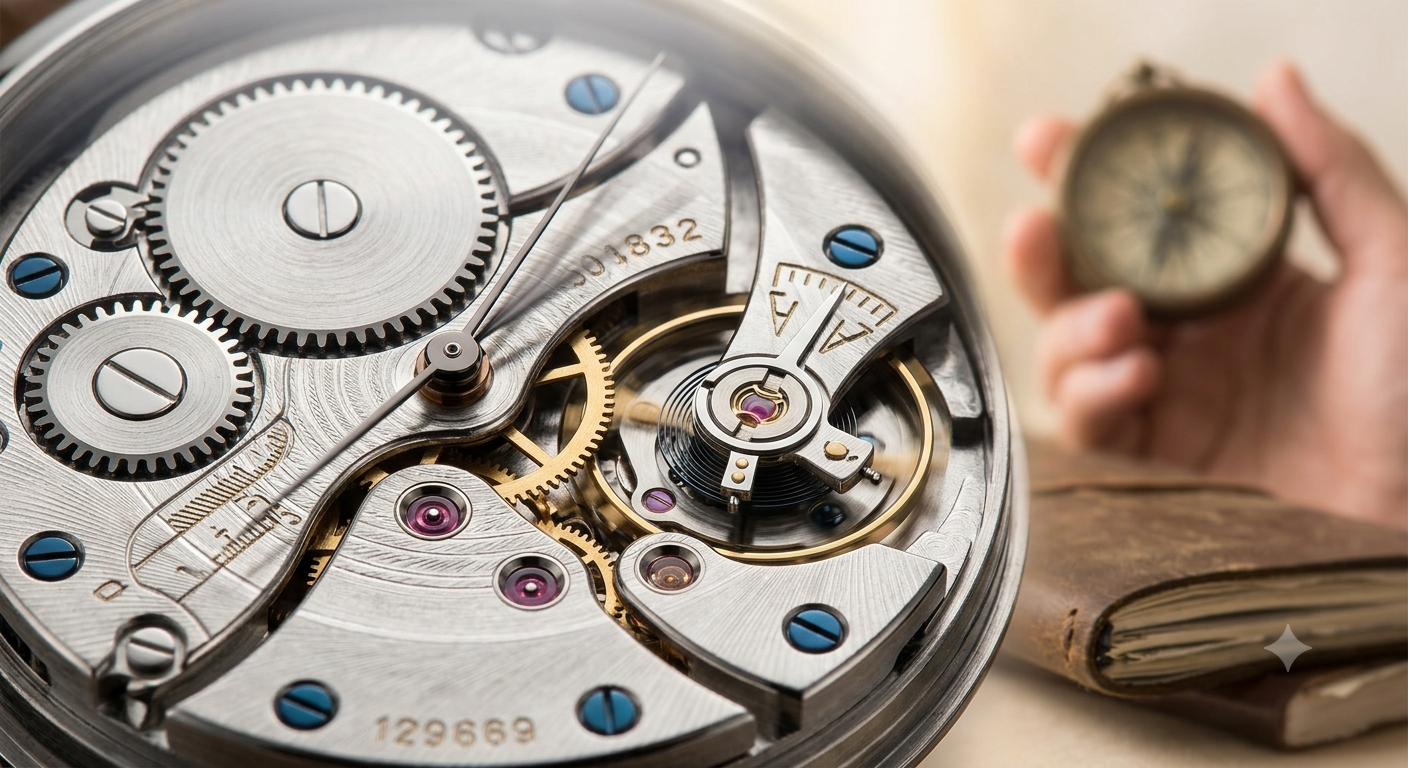

2026 Q2 Note
PerfectTiming
Hi there,
On our side of the cosmos, where we humans have found ourselves, time is an important resource. In fact, we trade, sacrifice, gift, and waste our time daily. When you go to work in those conglomerates, you are offering your skills and time in exchange for a reward (called a salary). When you dedicate your time to a cause and find yourself championing ideas that will benefit future generations, that is sacrificing or sowing time. Out of love and kindness, many also gift their time to family members, friends, and even strangers at times. Interestingly, we also waste time, and it is okay—but what matters in the end is the amount of time we are truly wasting daily versus what we could achieve if we had invested that time in a purposeful way.
A man’s life is determined by what he does with his time. When I am playing PS5, is that a waste of time? When I am watching my favourite club, does that necessarily mean I am wasting my time? What makes our time valuable? Is it by doing what the current structure of our society rewards? Imagine people doing all sorts of crazy things on social media and being paid because they have millions of impressions and likes. Time is meant to be used in a balanced, fun, and productive way. Some may say, “Go off social media to ensure you maximize your time,” while others say, “Don’t watch TV or buy one.” All these rules are useless until you understand your purpose, timing, and the sacrifice required. Understanding one’s “timing” means understanding the best moment to do things in order to achieve the best results. Get this straight: you are not designed or wired to do everything. In fact, there is usually a window to do the many things you are wired for in order to achieve the best outcome. That window is perfect timing.
I just woke up to this profound reality on timing, and in this article, I will be sharing some facts about time that we can learn from, along with what makes perfect timing.
Good and Big Things Take Time
The process of creation takes time. I wish I could tell you otherwise, but the humble truth is that the best and most breathtaking things in life take time. I love the story of the Chinese bamboo. When a bamboo tree is planted, it doesn’t show any appearance of growth in the first four years. In that period, mockers and bystanders may think the tree is even dead. But silently and patiently, it is growing its roots deep in the ground. Other farmers may have planted and harvested many other plants during this period, but not the bamboo. However, a miracle happens in the fifth year—its shoot begins to sprout, and within just six weeks, it grows to 2.5 metres. Here is what we can learn: the time the bamboo spent deepening its roots may appear long, but the result speaks for itself in the end.
Likewise, iconic buildings, skyscrapers, and monuments take a good amount of time before completion. For instance, the tallest church in the world (Sagrada Família in Barcelona) has just been opened. Can you believe this building’s construction started in 1882? The project has endured several decades, but when you see the sky view of the building, you will understand that the number of years invested really counts.
Moving forward, the best careers of our time—like neurosurgeon or robotics engineer—take time. In fact, there is the 10,000-hour rule for becoming a master of certain skills. Time is not just seconds, minutes, hours, days, weeks, months, and years; it is an element of creation that makes motion comprehensible and allows things to be engineered.
So if we agree that good things take time, what is perfect timing for any goal or vision? I would say perfect timing translates to the best time to start or complete those goals or visions you have.
“Good things take time, as they should. We shouldn’t expect good things to happen overnight. Actually, getting something too easily or too soon can cheapen the outcome.”
— John Wooden“The two most powerful warriors are patience and time.”
— Leo TolstoyTime is a Currency
Metaphorically, it can be said that time is a currency we spend daily. As many currencies in the world have their associated value, so does our individual time. What type of time currency do you have—is its value expensive or low?
Every single day, we are given 24 hours’ worth of time. We can’t save this time, we can’t order more, and we can’t even borrow from our future allocations. Many treat time like “pocket change”—they spend it on distractions, gossip, or other low-value tasks. It is even shocking that some can sabotage the daily inflow of this currency by their habits and disposition. For instance, a drug addict is a waster of his daily portion of time, and if he or she is not lucky enough, death comes knocking at the door in no time.
Successful people actually treat time as venture capital, wisely investing it in relationships, learning, health, and high-impact work. For instance, good health through nutritious food and daily exercise pays back in the near and long term and helps maintain the flow of this currency. How do you use your own currency? Do you invest part of it wisely, or do you just spend it as it comes? We all know we cannot live forever. This means our time on earth is finite. Unfortunately, we also don’t know how much balance we have left. And this is why what we do daily matters. Every time we say yes to something, we are indirectly saying no to many other things we could have done in that particular time. You see why time is our ultimate opportunity cost and must be protected fiercely.
Perfect timing is all about knowing when to deploy or invest that currency for the best return. Spending time at the wrong moment is like buying high and selling low—one is literally wasting the currency.
“The true currency of life is time, not money, and we’ve all got a limited stock of that.”
— Robert Harris“People who have become great have only become great because they bought that greatness with time.”
— Sunday AdelajaTime Brings Reward and Consequences (The Compound Effect)
Time is an underappreciated and neutral provision by the universe—it flows constantly. Time is required for creation. Time aids the flow of things: information, ideas, change, and even destruction. Let’s consider two different times: seed time and harvest time. Seed time is the time of sowing. This could be helping other people, learning new skills, wasting prime time on unrewarding activities, disobeying the laws of the government, and so on. The other time—the time of reward and consequences—is harvest time. This is the time of getting results for the things sown.
Depending on your situation and circumstances in life, you may find yourself in the period of sowing or harvest. Sowing time is an unpopular period of life (most people don’t notice you at this time), but everyone sees you at the time of harvest (whether it is a good or bad harvest). Interestingly, time acts as both a revealer and an enforcer of the actions and inactions of men. Our choices, habits, investments, and inactions get accounted for and they don’t vanish as many may think; instead, they compound—often invisibly at first—until their fruits (bitter or sweet) become undeniable.
For instance, when you eat poorly or skip exercise for months, the consequences (weight gain, fatigue, disease risk) arrive gradually and then suddenly. In addition, neglecting relationships and taking people for granted in the long run causes resentment and deep connections to be lost. Integrity, patience, and courage may feel costly at first but compound into respect, resilience, and better opportunities later on.
Perfect timing isn’t magic or luck. It is an intersection of preparation, awareness, and decisive action. Getting the timing right is like making a brilliant investment that compounds for years.
“Time is what we want most, but what we use worst.”
— William Penn“Time is a created thing. To say ‘I don’t have time,’ is like saying, ‘I don’t want to.'”
— Lao TzuConclusion
As I conclude my thoughts on time, I want to share with you an important experience I had at an automobile repair shop. This was several years ago, when I worked as an apprentice during my undergraduate studies. There are many parts that can go wrong in a car that was imported to Nigeria—from shocks to pads, discs, gears, throttles, fuel filters, temperature sensors, and of course the engine. While working at this shop, I was also privileged to see how engines can be repaired to improve their performance (especially when the rings are worn or there are issues with the cam). But an important part of the whole process is to ensure you understand the timing of the car before disconnecting any parts. Each car has different timing, and the timing of sophisticated cars with V6 engines is even more complex. If you don’t get the timing right, the car may not start or may underperform. In the worst-case scenario, the engine knocks when there is bad timing.
Now, what can we draw from this engine story I have just shared? This is it: our time and timing are critical. They affect everything, whether we believe it or not. Sometimes, you may get everything else right, but if your timing isn’t right, you end up failing. At another time, you may do things shabbily and still end up winning. We can call it luck, but we can just as well say it’s perfect timing.
I do many things at the moment, and there are many other things I also want to do. Do I know if the time for many of the things I am doing is right? The answer is no. In fact, there are many paths I have journeyed that were unclear at the beginning but made sense at some point. So friends, the real key to accessing the realm of perfect timing is seizing the moment (carpe diem). Those who seize the moment understand the rhythms of time, and they can tell when all the forces of the universe are in sync with their beats.
Thank you for reading. Don’t forget to drop your comment below.




[430993]supplies professional anti-violence equipments and solutions for the whole world with strong and perfect production capacity. anti-violence.org
This is hands down the number one platform for me. Everything from the deposits to the gameplay is top notch. Visit phno1jili and see for yourself.
Super easy to navigate and the promotions are updated daily. It is definitely one of the most reliable sites I have used. Try ph5jljl
Super impressed with the loading speeds and the overall vibe of the site. It feels professional and fair. If you are looking for a steady win, try gp88game.
I’ve been trying a few different sites lately and this one really stands out. The payouts are fast and the interface is super smooth. Definitely worth checking out pk777cc
The app version is just seamless. Everything is so organized and easy to navigate. I’m really enjoying my time on bd4999betapk.
The VIP perks here are actually worth it. I felt the difference in service immediately after signing up. Big shoutout to ph42vipph for keeping the quality high.