
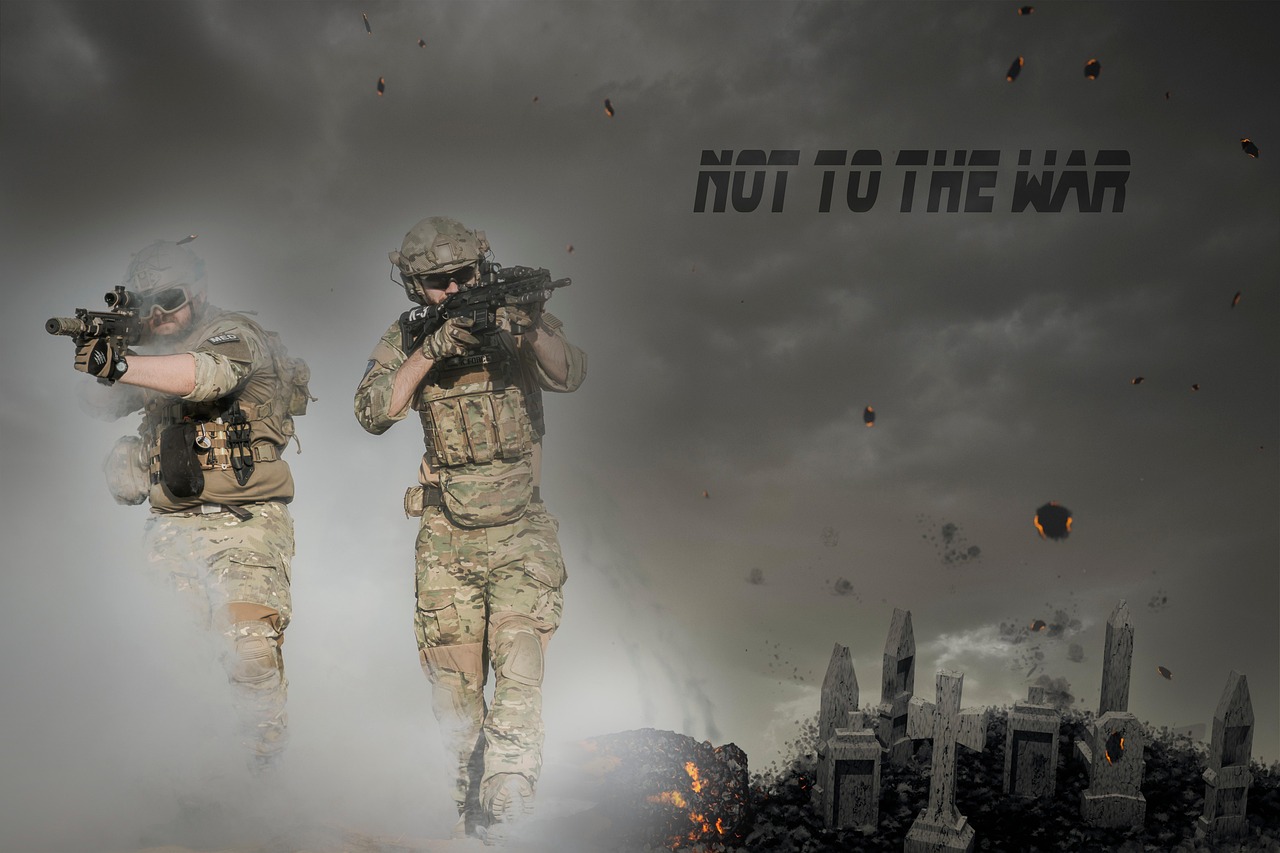

Happy new month. May is a special month for me, and I earnestly look forward to great experiences throughout it. Let me quickly share some of my thoughts from the recently concluded month with you. What I am sharing is a form of empathetic reflection as well as self-reflection. I focused on the ongoing war and its effects on people. Specifically, I started considering the dire implications of the current invasion of Ukraine. Many Ukrainians, like us, had goals and expectations for this year, and none of them would have envisaged a war, especially the way it unfolded around late February when the year began. The war came as a shock, and believe me, it is and will continue to be a threat to global peace as long as Russia refuses to back off or come to terms with Ukraine. Perhaps, the Third World War is here.
What truly bothers me is this: I think after years of enjoying global peace, economic development, and the dividends of globalization and democracy, we are in no way prepared for a war. The sudden hit of COVID-19, coupled with the initial fear and shock, the lockdown, and several protests experienced around the globe in the bid to return to normalcy, is indicative. People got bored, and some fell into depression during the lockdown after staying indoors for a few months. Some died during the early days of the pandemic, not because they were infected and became seriously ill, but due to emptiness, worry, and a lack of motivation to live. If all that happened because of the pandemic, I ask: can we endure a war? Have you imagined staying in an underground/bomb shelter for months, as some do now in Ukraine? Have you thought of a situation where your freedom to go places and eat whatever you like is taken away? How can you and I survive when it seems we have lost everything? I know my thoughts may sound a little strange to you. But I found some answers to resonate with our hope (even in the lowest circumstances) in a book I read titled *Man’s Search for Meaning* by Viktor Frankl.
In the book, the author throws light on his unique and observed experiences as a prisoner in Nazi concentration camps during the Second World War and introduces the concept of logotherapy. What is logotherapy? “It is based on the belief that the search for meaning, even amidst misery, can constitute a potential solution to human suffering.” I will quickly share two profound lessons from the book that I feel can be helpful to us in this current global dispensation:
1. Freedom to Choose Your Attitude
Dr. Frankl explains how prisoners are dehumanized and stripped of every sense of dignity at the concentration camps. According to him, life in the camp starts with mental shock on arrival and then apathy or “emotional death” after getting used to subjugation. Moreover, if a person is lucky to be alive until liberation, he/she is faced with “depersonalization, moral deformity, bitterness, and disillusionment.” According to Frankl, the chance of dying (due to diseases from malnutrition or being sent for extermination in gas chambers) is higher in the camp than surviving. In fact, their disposition was to be okay with dying at any moment to muster the courage to survive. What many of us take for granted are limited in camps: food, clothing, shoes, medicine, and sleep. Some needed to grab a pair of shoes or thick clothing from a dead body to use. Despite the horrors and terrors in the camp, the author mentioned one thing that couldn’t be taken from them: the freedom to decide their attitude and fate at any time.
Frankl puts it this way: “Everything can be taken from a man but one thing: the last of the human freedoms—to choose one’s attitude in any given set of circumstances, to choose one’s own way.” “A human being is a deciding being.” “Between stimulus and response, there is a space. In that space lies our power to choose our response. In our response lies our growth and our freedom.”
2. Responsibility to Find Meaning
We all have a deep desire to find meaning. I mean there is a part of you that seeks to fulfill a purpose. Even in war, death, and suffering, life holds a meaning. It’s our moral responsibility to find that meaning. The three ways to find meaning, as stated in the book, are through work, through love, and through suffering. During tough moments in the camp, Frankl found solace in the work he wanted to do upon leaving the camp. Besides, picturing his wife in the camp brought him love, and he was able to see his sufferings as a form of sacrifice.
Frankl submits that: “Life is never made unbearable by circumstances, but only by lack of meaning and purpose.” “Everyone has his own specific vocation or mission in life; everyone must carry out a concrete assignment that demands fulfillment. Therein, he cannot be replaced, nor can his life be repeated. Thus, everyone’s task is as unique as his specific opportunity to implement it.” Viktor E. Frankl
Conclusion
I like to find meaning. As I write to you, it is an effort to understand my own unique meaning. Even when it’s not convenient to write, I choose to do it anyway. We millennials are quick to yearn for freedom—forgetting that we have dues to pay to the coming generation. I have realized freedom is not cheap; someone has to pay. As we take responsibility for life, our attitude will change positively, and the discovery of meaning will make better sense.
Thanks for reading and happy new month. Talk to you soon.
I am Samuel Ayankoso | The Quester
“He who has a why to live for can bear almost any how.” ― Friedrich Nietzsche
“When we are no longer able to change a situation, we are challenged to change ourselves.” – Viktor Frankl
“For the world is in a bad state, but everything will become still worse unless each of us does his best.” – Viktor Frankl
“Ultimately, man should not ask what the meaning of his life is, but rather must recognize that it is he who is asked. In a word, each man is questioned by life; and he can only answer to life by answering for his own life; to life he can only respond by being responsible.” – Viktor Frankl
“Happiness cannot be pursued; it must ensue.” – Viktor Frankl
“Man does not simply exist but always decides what his existence will be, what he will become the next moment. By the same token, every human being has the freedom to change at any instant.” – Viktor Frankl





I appreciate the variety of games available. There is always something new to explore and the rewards keep me coming back to vnke88
Finally found a place that doesn’t lag during the big wins. The login process is quick and the support team is actually helpful. Give jb777login a try
I was looking for a reliable place to play and this is it. Very secure and the bonuses are actually fair. Check out 17777betlogin
Finally found a site that does not crash during peak hours. The loading time on phss7777 is impressively fast.
[1602]lucky jackpot লগইন এবং অ্যাপ ডাউনলোড – বিকাশ ক্যাসিনো ডিপোজিট,lucky jackpot লগইন করে অনলাইন স্লট গেম ট্রিকস জানুন এবং লাইভ ক্যাসিনো বোনাস অফার উপভোগ করুন। আজই অ্যাপটি ডাউনলোড করে গেম শুরু করুন। visit: lucky jackpot