
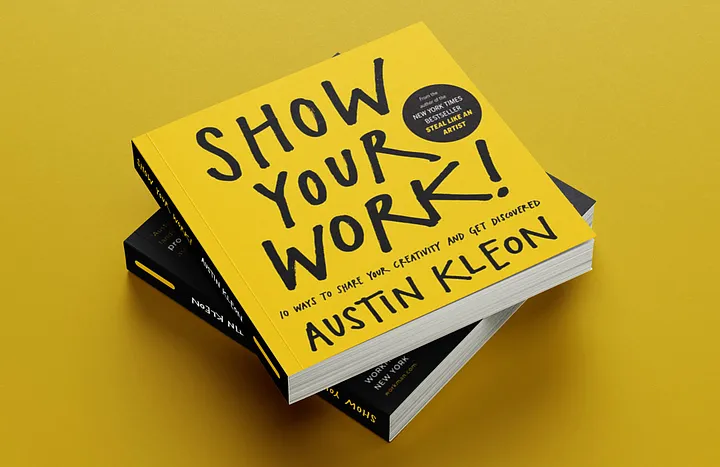

Here’s a secret I have to tell you. At the beginning of the year, I intended to share my thoughts on social media about some specific topics that interest me. Unfortunately, I lost interest or perhaps didn’t have enough courage to do that. However, I was inspired to share things (no matter how small) through a book I recently read. The book is titled “Show Your Work” by Austin Kleon. In it, I found strategies that can help in sharing one’s work. Let’s consider those key points together.
1. Read Obituaries:
Reading obituaries challenges every bit of cowardice in you. Many people’s trajectories have changed through near-death experiences, and reading an obituary can provide a similar insight. An obituary exposes you to how people, now deceased, did something with their lives, inspiring you to do something great with yours as well.
2. Share Something Small Every Day:
Don’t hoard your ideas. Learn to share bits and pieces of your work every day. It’s simple: “You can’t find your voice if you don’t use it.” The chance of succeeding overnight is slim; in fact, it’s a myth. Focus on how to show your work daily, and you’ll begin to attract those interested in it.
3. Become a Good Storyteller:
Don’t expect your work to speak for itself. The truth is, people are interested in the story behind the work—who made it and how. An important element of a good story is the structure. Your story should be logical and have a beginning, middle, and end. Value your audience’s time. Learn to speak and write well. Telling good stories doesn’t come naturally to everyone, and you may need to learn this art. For example: “The cat sat on the mat is not a story. The cat sat on the dog’s mat is”—John le Carré.
4. Build Your Brand/Name:
The best way to build a long-term presence on the Internet is to create your own website and have a domain name. Tweeting is great, but Twitter may not be around in a few years. “Carving out a space for yourself online, somewhere where you can express yourself and share your work, is still one of the best possible investments you can make with your time.”—Andy Baio.
5. Learn to Take a Punch:
Take seriously the feedback from those who genuinely care about you and what you’re trying to achieve—not the haters. Don’t feed the trolls who want to demoralize you through their critique. Build a mental firewall if needed—it’s good for your sanity. Block people if necessary. If you post controversial content on YouTube, for instance, you can turn off comments.
Conclusion:
I think it takes a lot of guts to put yourself out there. But some have built that confidence, and they are benefitting from their extensive network online. What are you afraid of? Making mistakes? Nah, everyone does that. You think you’re not good enough? Relax, you don’t need to be a genius to share things. Oh, you just got a job, a Ph.D., or a master’s scholarship, and you feel awkward sharing it. You think the best time to share your achievement is when you get promoted or earn the degree. No, no—share it now. Share that messy process that qualified you for the job or the scholarship. That’s the best way people can connect to your achievements. Still in doubt? Don’t be. You are enough, and your story is worth hearing. Get started now! Begin to show your work.
I hope you have found some valuable lessons in this read. Follow me for more stories, book reviews, and interesting content on personal development.
I am Samuel Ayankoso (the Quester)







Super easy to navigate and the registration process took me less than a minute. It’s refreshing to find a site like zuply that doesn’t overcomplicate things for the users.
Finally found a site that actually treats its VIP players well. The bonuses are generous and fair. Give vipphfunlogin a try.
I’ve been using this platform for a while now and the experience is just smooth. Definitely one of the best choices for gaming. Check out pkbaij999 for more info.
[5599]spbu77: Login Daftar Slot Gacor Dana Tanpa Potongan,spbu77 memudahkan login dan daftar bagi pemain yang mencari slot gacor dana tanpa potongan. download apk casino android untuk akses cepat sekarang. visit: spbu77
[3627]betninja লগইন এবং অ্যাপ ডাউনলোড | বিকাশ দিয়ে ক্যাসিনো ডিপোজিট,betninja login করার নিয়ম জানুন এবং অ্যাপ ডাউনলোড করে অনলাইন স্লট গেম খেলার নিয়ম শিখুন। লাইভ ক্যাসিনো বোনাস অফার পেতে আজই জয়েন করুন। visit: betninja